
Table of Contents
- Why Titanium Is the Material of Choice for Vaporizers
- Titanium vs. Stainless Steel: Thermal Dynamics and Flavour
- What to Look for in a High Quality Titanium Vaporizer
- How to Use a Torch with a Titanium Vaporizer
- Induction Heater Benefits for Dry Herb Vapes
- Cleaning and Maintenance for Titanium Vaporizers
- Our Top Titanium Picks: The Omni and The VonG (i)
- Make the Switch to Titanium
- Frequently Asked Questions
Last Updated: September 7, 2026
Why Titanium Is the Material of Choice for Vaporizers
Titanium sits in a unique position among vaporizer materials. It is roughly 40% lighter than stainless steel yet offers comparable strength, which makes it ideal for a portable device you carry daily. When you buy high quality titanium vaporizer options, you are investing in a component engineered for rapid heat-up and cool-down cycles, giving you more control over each session.
At DynaVap, we machine our tips from medical-grade titanium because it balances durability with thermal responsiveness. The practical result is a dry herb vaporizer that heats efficiently, resists corrosion, and feels substantial without weighing down your pocket. Titanium also develops a natural patina over time, which many users find adds character without affecting performance.
The real advantage is material efficiency. Titanium's thermal properties mean you extract more from less herb, which is why many users find they stretch their stash significantly further.
Titanium vs. Stainless Steel: Thermal Dynamics and Flavour
Choosing between titanium and stainless steel isn't just about weight, it's about how each metal responds to heat and how that shapes your session. The core difference lies in thermal conductivity and specific heat capacity. Titanium has a lower specific heat capacity than stainless steel, meaning it requires less energy to reach temperature. In practice, this translates to a faster heat-up time and a quicker cool-down.
Heat-Up and Cool-Down Times
With a single-flame torch, a titanium tip typically clicks in about 5 to 7 seconds, while a stainless steel tip of the same size often takes 8 to 12 seconds. The cool-down is equally distinct. Titanium will drop below the vaporisation threshold within 20 to 30 seconds after you stop heating, allowing you to clearly feel the end of a cycle. Stainless steel, by contrast, retains heat for a minute or more, which can lead to accidental overheating if you're not paying attention.
What This Means for Your Inhalation Style
This thermal behaviour isn't just a spec-sheet detail, it changes how you vape.
- For quick, flavour-focused hits: Titanium's rapid cool-down means you can take a hit, set the device down, and pick it up later without worrying about it cooking your herb in the meantime. Each session feels fresh.
- For longer, slower sessions: If you prefer to sip on a single load over several minutes, stainless steel's heat retention can be an advantage, as it keeps the chamber warm between draws. However, this also means less control; you can't easily stop the cooking process mid-session.
- For technique-driven users: Titanium rewards a more attentive approach. Because it cools quickly, you'll reheat more often between draws. This isn't a drawback, it's a feature that gives you precise control over each puff. You decide when to add heat, rather than the device deciding for you.
Flavour Purity and Material Interaction
Flavour is where titanium truly shines. Stainless steel is generally inert, but it can impart a faint metallic note, especially when new. Titanium is even more neutral, allowing the natural terpenes in your herb to come through clearly. The faster heat-up also means your herb spends less time in the 'warming up' phase, which can produce a slightly roasted taste. With titanium, you get a cleaner, more immediate expression of the plant's profile.
The Trade-Off: Technique
The primary trade-off is that titanium requires a slightly more attentive technique. Because it cools quickly, you will reheat more often between draws. This is not a flaw, it's a feature for those who value control. For most users, this is a fair exchange for cleaner taste and a lighter device. If you're new to manual vaporizers, the learning curve is short, and the click system removes most of the guesswork.
What to Look for in a High Quality Titanium Vaporizer
Before you buy high quality titanium vaporizer models, check five specifications that separate premium builds from cheap imitations.
First, confirm the grade of titanium. Medical-grade material signals stricter quality control and better corrosion resistance. Second, examine the tip design. Look for fins and channels that distribute heat evenly; a well-machined tip roasts your herb uniformly rather than charring the edges. Third, check the chamber capacity. A standard tip holds roughly 0.1g, which suits most sessions, while adjustable bowls allow microdosing at half that amount.
Fourth, assess airflow control. A high quality titanium vaporizer should let you adjust draw resistance to match your preference. Finally, consider modularity. Devices with replaceable tips, condensers, and screens cost more upfront but save money over time since you replace only the worn part.
How to Use a Torch with a Titanium Vaporizer
Heating a titanium vaporizer with a torch is straightforward once you understand the click system. The cap emits an audible click when it reaches the optimal vaporisation temperature, removing the guesswork from your session.
Hold the device at a 45-degree angle and apply the torch flame to the middle of the cap. Rotate the device steadily to distribute heat evenly; titanium responds quickly, so a single full rotation is usually enough. The click typically arrives within 5 to 7 seconds with a single-flame torch. Stop heating immediately when you hear it, then inhale from the mouthpiece.
A common mistake is heating too close to the tip's base. Keep the flame moving and respect the click. With practice, the ritual becomes second nature within a few sessions.
Induction Heater Benefits for Dry Herb Vapes
An induction heater removes the torch from the equation entirely. Instead of a flame, the device uses an electromagnetic field to heat the cap evenly from all sides. This eliminates the need to rotate the device and produces more consistent results across every session.
The main benefit is convenience. There is no butane to refill, no wind to fight outdoors, and no risk of scorching the cap from uneven heating. Many users find induction heaters produce slightly more flavour because the heat distribution is so uniform. Note that induction heaters do use a battery, so they require charging, unlike the vaporizer itself which remains battery-free.
For new users, an induction heater shortens the learning curve considerably. You simply insert the device, wait for the click, and draw. For experienced users, it offers a more relaxed session without sacrificing control.
| Heating Method | Heat Source | Best For | Key Trade-off |
|---|---|---|---|
| Torch | Butane flame | Portability, ritual | Requires rotation technique |
| Induction Heater | Rechargeable battery | Consistency, ease of use | Needs charging between sessions |
Cleaning and Maintenance for Titanium Vaporizers
Titanium's corrosion resistance makes maintenance simpler than with other metals, but regular cleaning keeps flavour at its best. Residue buildup in the condenser and tip can mute terpenes and restrict airflow over time. A little routine care goes a long way. Here’s a practical guide to keeping your titanium gear in top shape.
The Weekly Wipe-Down
For everyday maintenance, a quick wipe-down is all you need. After the device has cooled completely, use a dry cloth or a cotton swab to wipe the inside of the tip and the condenser. This removes loose particles and prevents light residue from hardening. The Cap should only ever be cleaned this way, never soak it in any liquid. A dry wipe down is sufficient to keep it functioning correctly.
The Deep Clean: A Step-by-Step Guide
Once a week or every couple of weeks, depending on how often you vape, a deeper clean is beneficial. Here’s how to do it without damaging any components.
- Disassemble Fully: Take the device apart completely. Separate the tip, condenser, and any other titanium parts from the O-rings and the Cap. The O-rings should not be soaked in alcohol, as it can degrade them over time.
- Soak the Titanium Parts: Place the titanium components (tip, condenser, CCD screen) in a small container with warm, soapy water or isopropyl alcohol. Let them soak for 10-15 minutes to dissolve the resin. For stubborn buildup, a longer soak may be needed.
- Scrub Gently: Use a pipe cleaner or a soft-bristled brush (like a baby toothbrush) to gently scrub the inside and outside of the parts. Pay attention to the fins on the tip and the inside of the condenser where residue can accumulate. Avoid using anything abrasive that could scratch the titanium's surface.
- Rinse Thoroughly: Rinse all parts under warm running water to remove any soap or alcohol residue. Ensure no cleaning solution remains, as it can affect the flavour of your next session.
- Dry Completely: Shake off excess water and place the parts on a clean towel to air dry completely. Make sure everything is bone-dry before reassembling to prevent any moisture from affecting the device.
- Reassemble: Once dry, put the device back together. Ensure the O-rings are properly seated and the CCD screen is pushed back into place. A well-maintained device will perform consistently.
Preventing Residue Buildup
Prevention is better than cure. A common pattern is that residue builds up faster if you use finely ground herb or if you tend to pack the chamber tightly. Using a coarser grind and not overpacking can reduce the amount of resin that makes its way into the condenser. Also, letting the device cool down completely after a session before you put it away helps prevent vapour from condensing into sticky residue inside the stem.
Replacement Parts
Even with meticulous care, some parts will eventually wear out. The CCD screen is the most common part to replace. A three-pack of replacement screens is inexpensive and offers months of extended use. Similarly, O-rings can become brittle over time and may need replacing to maintain an airtight seal. Keeping a small stock of these consumables ensures your device is always ready to perform.

Our Top Titanium Picks: The Omni and The VonG (i)
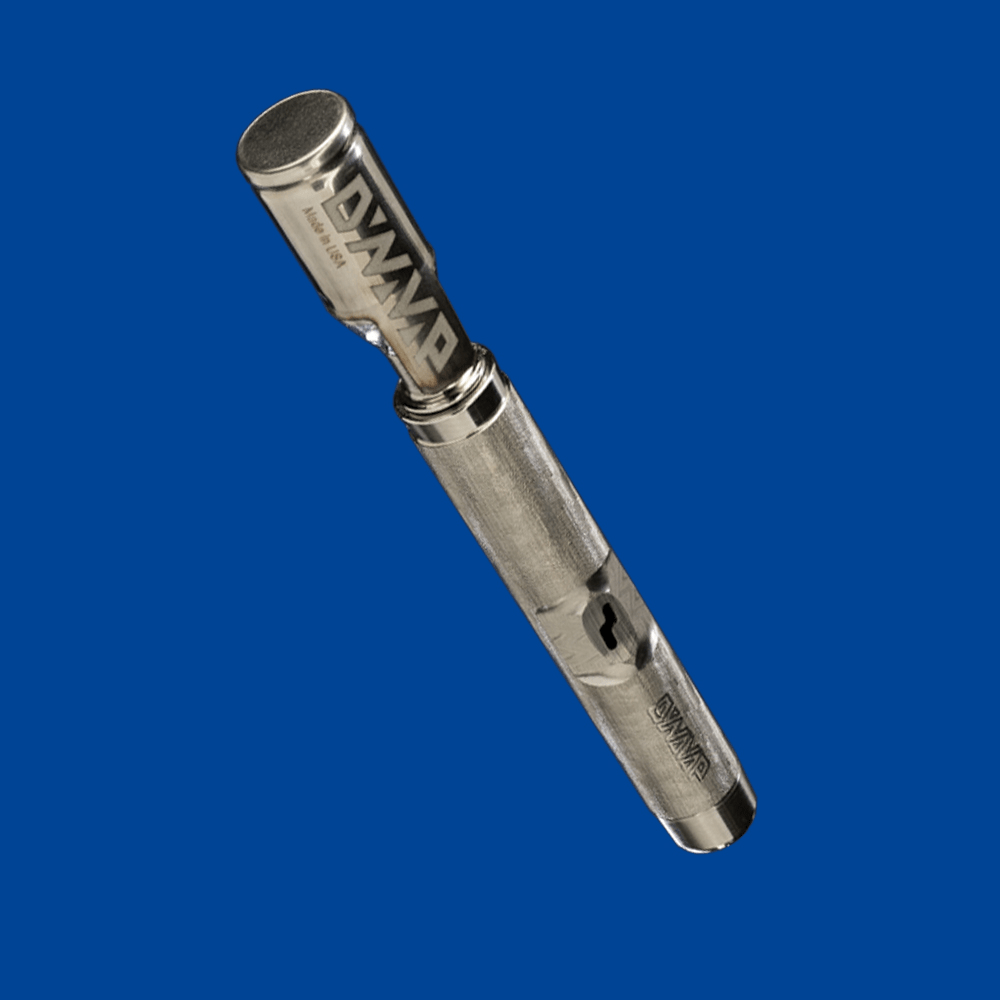
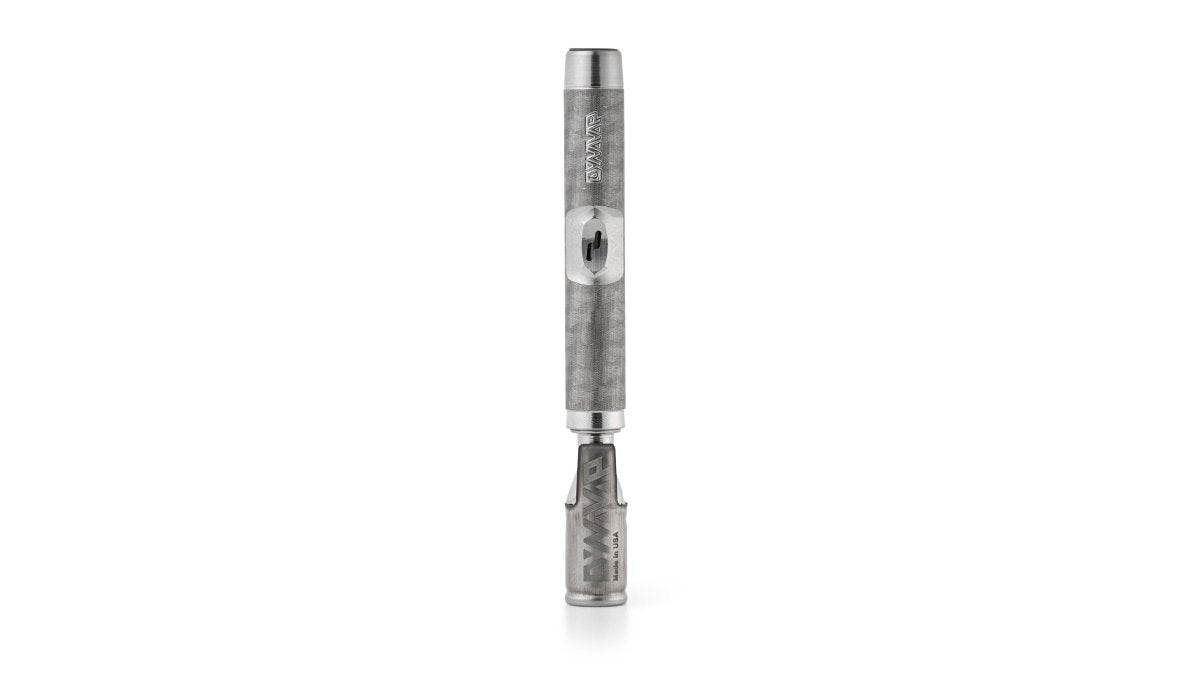
Two devices stand out for different reasons. The Omni is DynaVap's flagship, priced at £225.00, and it delivers the finest airflow control available. A dial indicator lets you adjust draw resistance visually, while a spiraled condenser cools vapour before it reaches you. The contoured titanium body fits naturally in hand, and the Captive Cap clicks reliably to signal when your herb is ready.


The VonG (i), at £181.00, is the more versatile option. Its tapered mouthpiece fits both 10mm and 14mm water piece openings, so it works beautifully with glass or as a standalone dry herb vaporizer. A rotating sleeve simplifies airflow adjustment, and the thick titanium exterior feels near indestructible. The Adjust-a-Bowl feature halves the chamber for microdosing when you want a lighter session.
Both devices are built to last a lifetime and come with a 90-day money-back guarantee. If you want the pinnacle of airflow refinement, choose the Omni. If you plan to use glass frequently, the VonG (i) is the smarter buy.
Make the Switch to Titanium
A high quality titanium vaporizer is not the cheapest option available, but it is the one that rewards you daily through better flavour, lighter carry, and faster heat control. Stainless steel devices cost less initially but retain heat longer and weigh more, which many users find less satisfying over months of use.
DynaVap stands behind this difference with a 90-day money-back guarantee, so you can test the experience without risk. Rated 4.7 out of 5 stars from over 10,000 reviews, our titanium devices are trusted by more than one million people worldwide. One verified buyer, Gavin B., called it "amazing piece of kit, by far the best manual vape on the market."
Frequently Asked Questions
Why choose a titanium vaporizer over stainless steel?
Titanium offers a superior strength-to-weight ratio, so a titanium vaporizer is both lighter and more durable than a stainless steel one. Its thermal properties also allow for faster heat-up and cool-down times, which can lead to more efficient sessions and better flavour. Titanium is also naturally corrosion-resistant and and is often used in medical-grade applications.
Are titanium vaporizers more durable?
Yes, titanium is an exceptionally durable material. Vaporizers like The Omni are crafted from titanium and are built to last a lifetime. It is highly scratch-resistant and can withstand the knocks and drops of daily use, making it a great choice for outdoor enthusiasts and travellers. This durability also means a titanium vaporizer is a worthwhile long-term investment compared to devices made from more fragile materials.
How do I maintain my titanium dry herb vaporizer?
Maintaining a titanium vaporizer is simple and keeps it performing at its best. Regularly brush out the tip chamber after each use to remove residue. Periodically, you can disassemble your device and clean the components with isopropyl alcohol, but never soak the Cap. Instead, give the Cap a wipe down only. This helps prevent residue buildup and ensures your device continues to deliver clean, pure flavour.
What are the benefits of battery-free titanium vaporizers?
The main benefit is reliability. A battery-free titanium vaporizer, like those from DynaVap, is powered by a simple torch or an induction heater, so you never have to worry about a battery dying mid-session. This is ideal for travel and outdoor use. They are also simpler devices with fewer parts that can fail, which contributes to their impressive durability and longevity.
Switching from combustion to a titanium vaporizer changes not just how you heat your herb, but how much you enjoy each session. The learning curve is short, the maintenance is simple, and the flavour improvement is immediate. Explore The Omni or The VonG (i) today and experience the difference that precision-machined titanium makes. Get started with DynaVap and elevate your sessions.