
Last Updated: October 29, 2026
Quick Summary
The best durable herb vaporiser materials for portable devices are stainless steel and titanium. Stainless steel holds heat longer for session-style extraction, while titanium is lighter and more scratch-resistant for travel. Whichever you choose, check that the screen, cap and tip are sold separately.
- Stainless steel is heavier and holds heat longer; titanium is lighter and heats and cools faster.
- Press a fingernail against the chamber wall and walk away if it flexes.
- Threadless designs avoid threads that clog or wear over time.
- A sealed body with no replacement parts will fail on a single worn component.
- Never soak the cap; a wipe down is all it needs.
Table of Contents
- Why Durable Materials Matter in Portable Herb Vaporisers
- Stainless Steel vs Titanium Vaporiser: Which Metal Lasts Longer?
- Build Quality and Material Durability: What to Inspect Before Buying
- Best Portable Dry Herb Vaporisers Built Around Tough Materials
- Repairability and Spare Parts: The Durability Factor Most Buyers Miss
- How to Clean a Dry Herb Vaporiser Without Damaging It
- Choosing Your Durable DynaVap Setup
- Frequently Asked Questions
Why Durable Materials Matter in Portable Herb Vaporisers
A portable herb vaporiser lives a hard life, pockets, rucksacks, campsite gravel, and cleaning far less often than it should. At DynaVap, we build around one idea: a device should outlast the enthusiasm that bought it. That starts with the herb vaporiser materials it is built from.
The best durable materials for portable herb vaporizers come down to two metals.
Here is the part most guides skip. Durability is not a spec on a box, it is material, wall thickness, how parts join, and whether you can replace the bits that wear out. A tough chamber on a sealed, unserviceable body is still a disposable device.
Below, we break down how the two metals compare, what to inspect before you buy, and which setups we would choose for different users.
Stainless Steel vs Titanium Vaporiser: Which Metal Lasts Longer?
Both are built to last. Titanium is lighter; stainless steel holds heat longer. For most people the right choice depends on how you use the device, not on which metal is objectively better.
| Factor | Stainless Steel | Titanium |
|---|---|---|
| Weight | Heavier, feels solid | Noticeably lighter in the pocket |
| Heat retention | Holds heat longer | Heats and cools faster |
| Scratch resistance | Good | Better, especially with a hardened finish |
| Cost | Lower | Higher |
| Best for | Session-style, one-hit extraction | Travel, micro-dosing, quick cycles |
How Stainless Steel Handles Heat and Wear
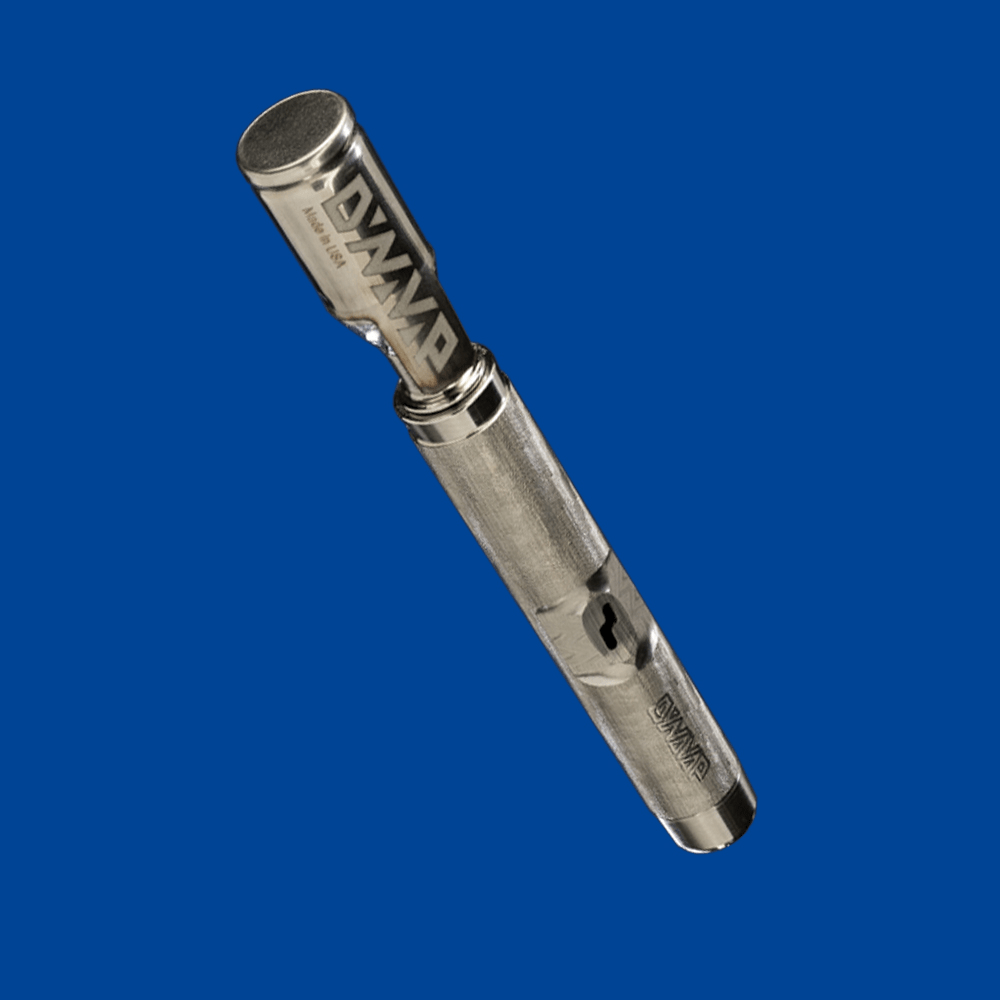
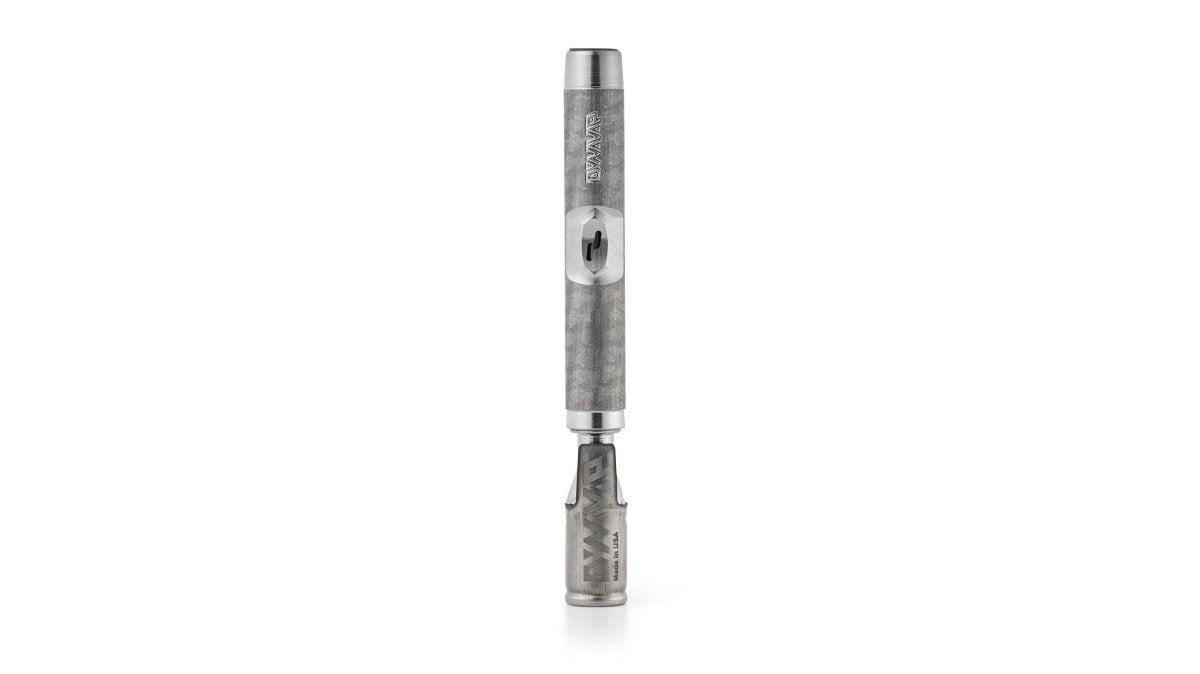
Stainless steel is a solid all-rounder, and the M 7 Tip carries more mass for heat retention. The M 7 Tip, for example, carries more mass in the chamber for heat retention and more control over one-hit extraction.
The M 7 Tip's finless design helps keep your fingers cooler by reducing heat travelling from tip to stem.
Where Titanium Wins on Weight and Scratch Resistance
Titanium is a good fit for travel. It is lighter and cycles through heat faster. Our titanium tips, including the titanium collection, use a DuraDyn finish that is ultra scratch-resistant.
Lighter does not have to mean flimsier. Titanium tips like the 5-Fin feature helical channels for airflow and a durable build. The real drawback is cost, and titanium sheds heat quickly, so back-to-back sessions need a moment.
Build Quality and Material Durability: What to Inspect Before Buying
Most buying guides say look for "solid build quality" and leave it there. Not useful. Durability is a set of physical properties you can check with your eyes and hands: wall thickness, joint design, cap fit and the spare parts list.
Wall thickness and why it beats marketing labels
A useful test: press a fingernail against the chamber wall. If it flexes, walk away. If it feels like a solid lump of metal, that is the standard you want.
Joint design: threadless versus threaded
Threadless designs, where parts push together and are held by friction or an O-ring, are a practical way to avoid threads that clog or wear over time.
Cap fit and the click
The cap clicks once during heat-up and once during cool-down, so there is nothing to monitor.
The spare parts list is the real durability test
Here is the question that separates a durable device from a disposable one: can you buy the screen, the cap and the tip separately? If not, the device has a built-in expiry date. A sealed body with no replacement parts fails on a single worn component, and you buy a whole new device instead of a screen.
Material science: what actually degrades over time
Most guides compare materials on performance and stop there. The more useful question is what happens to each material after a year of heat cycles.
A quick pre-purchase checklist
- Press the chamber wall, no flex.
- Check the tip-to-stem fit, tight, no rattle.
- Shake the cap gently, it should seat firmly.
- Ask whether the screen, cap and tip are sold separately.
- Confirm which metal the chamber is made from, not just the body.
Get those five answers and you will know more about a device's real lifespan than any spec sheet will tell you.
Best Portable Dry Herb Vaporisers Built Around Tough Materials
For us, the answer is a modular, battery-free design. That is the whole point of the DynaVap range, and why we would put our own lineup first here. See the full top DynaVap vaporisers for the short version.
What follows is not a spec dump. Each pick is tied to the material and design decision that makes it durable, so you can match a device to how you actually use it.
For new users: the B2 and the M 7
The B2 is a simple entry point. It uses a standard Tip in the regular 0.1g range, so you get a familiar chamber size.
The M 7 is the natural step up for daily use. Its stainless steel tip carries more mass in the chamber for heat retention. The finless design helps keep your fingers cooler by reducing heat travelling from tip to stem. There is one click on heat-up and one on cool-down. The M 7 XL is a larger option for users who want more capacity.
For travellers: titanium tips
If weight and scratch resistance matter more than heat retention, a titanium tip is worth the upgrade. Titanium sheds grams, resists scratches and cycles through heat faster, so you wait less between bowls. Our titanium tips, including the titanium collection, use a hardened finish that shrugs off keys and pocket grit. Lighter does not mean flimsier, tips like the 5-Fin are machined to tight tolerances with helical channels for airflow and hold up to years of use. The real drawback is cost, and titanium sheds heat quickly, so back-to-back sessions need a moment.
For returning users: VonG X, WoodWynd and HyperDyn
Returning users tend to gravitate toward the VonG X and the WoodWynd, both built for a more refined session. The VonG X pairs stainless steel construction with a design made to sit comfortably in hand, while the WoodWynd brings a warmer, more tactile feel without giving up metal where it counts. If capacity is the priority, the HyperDyn is the pick, as the Hyper Tip holds a larger chamber and pairs with the Hyper Cap or Thermal Hyper Cap.
Heating: torch or induction heater
Heating is simple either way. A torch and an induction heater are both good options. Just note that induction heaters do use a battery, so they need charging.
Matching the device to the user
- New users: B2 for the simplest start, M 7 for daily use, M 7 XL if you want more capacity.
- Travellers: a titanium tip for weight and scratch resistance.
- Returning users: VonG X or WoodWynd for a refined session, HyperDyn when capacity is the priority.
- Anyone with a worn device: a fresh screen and a wipe-down will revive it before you consider replacing anything.
The through-line is the same across the range: metal that holds its shape, parts that can be swapped, and a design that does not ask you to replace the whole device when one component wears out.
Repairability and Spare Parts: The Durability Factor Most Buyers Miss
A device you can fix is a device that lasts.
Our screens are a good example. The replacement CCDs filter fine particles without restricting airflow, and each three-pack should offer months of extended use. They are compatible with all Titanium and Stainless Steel Tips.
How to Clean a Dry Herb Vaporiser Without Damaging It
Keep it simple: wipe the cap down rather than soaking it, and wipe the tip and screen as needed.
Watch out: never soak the Cap. A wipe down is all it needs, and soaking risks trapping moisture where you do not want it.
For the full method, our guide on how to clean a vaporiser cap without water walks through it step by step.
Choosing Your Durable DynaVap Setup
Start with how you use it. If you want one device for daily use, the M 7 is a sensible pick. If you travel and want something lighter, a titanium tip is worth considering. If you already own a DynaVap, upgrading the tip is a simple way to change how it performs.
- New users: M 7 with its stainless steel tip
- Travellers: a titanium tip for weight and scratch resistance
- Returning users: VonG X, WoodWynd or HyperDyn for a refined session
- Anyone with a worn device: a fresh screen and a wipe-down will revive it
If you are ready to commit to a durable setup, you can view the stainless steel VonG X as a concrete option.
Frequently Asked Questions
What materials are best for a durable portable herb vaporiser?
Titanium and stainless steel are the two standouts. Titanium is lighter and resists scratches well, especially with a DuraDyn finish like the 5-Fin Titanium Tip, while stainless steel holds heat longer for fuller extractions.
Is stainless steel or titanium better for a dry herb vaporiser?
It depends on how you use it. Stainless steel, as in the M 7 Tip, retains heat for longer and gives you more control over one-hit extractions. Titanium, such as the Halo Tip, heats and cools faster and weighs less in your pocket. Both are practical options, and you can swap tips depending on whether you want a slower or quicker session.
Which parts of a portable vaporiser are most likely to wear out?
Screens, O-rings and the cap take the most punishment. Screens clog with fine particles, O-rings flatten over time, and caps collect residue. The good news is these are cheap and easy to replace. A Titanium CCD 3-pack costs £12 and covers months of use. Choosing a device with widely available spare parts matters more than chasing an unbreakable body.
Are battery-free herb vaporisers more durable?
DynaVap devices are battery-free and rely on a torch or an induction heater. Induction heaters do use a battery, so that accessory still needs charging.
How do you clean and maintain a metal herb vaporiser?
Wipe the cap down rather than soaking it, and never submerge it. Clean the tip and stem with a cloth, and replace the screen when airflow drops.
Durability is not a single spec. It is the metal, the build, and whether the device can be repaired. We build every DynaVap around battery-free heating, modular parts and a click that removes the guesswork, backed by a 90-day money-back guarantee and a 4.7/5 rating from over 10,000 reviews. Get started with DynaVap and choose a vaporiser built to last.