Last Updated: October 30, 2026
Quick Summary
A cannabis certificate of analysis is a lab report showing cannabinoid and terpene levels plus contaminant screening for one specific batch. Read the batch number first, then total THC and CBD, then the contaminant panel, and confirm the lab's accreditation before trusting it.
- Total THC combines the THC figure with roughly 0.877 times the THC-A figure.
- A result of ND means below the limit of detection, not absent.
- A QR code leading to a generic PDF rather than a batch-specific report is a red flag.
- Check that the lab is named with an accreditation reference such as ISO/IEC 17025.
- If a label's potency differs from the COA total, trust the COA.
Table of Contents
- What a Cannabis Certificate of Analysis Actually Tells You
- Walking Through a Cannabis COA Sample Report
- Decoding Cannabis COA Potency Results
- How to Verify a Cannabis COA Before You Trust It
- Contaminant Screening: Pesticides, Heavy Metals and Microbials
- Batch-Specific vs Generic COAs and Why Accreditation Counts
- Pairing Quality Material With a DynaVap Device
- Frequently Asked Questions
What a Cannabis Certificate of Analysis Actually Tells You
A cannabis certificate of analysis is a lab report that shows what is actually inside a batch of material. It lists cannabinoid levels, terpenes, and any contaminants found. At DynaVap, we think of it as the paperwork that backs up every claim a seller makes.
Most people skip straight to the THC number. That is a mistake. The full report tells you far more about quality and safety than one potency figure ever could.
The Sections You'll See on Every Report
Every decent report follows a similar layout. Here is what to expect:
- Product details: strain name, batch number, and sample ID
- Cannabinoid profile: total THC, total CBD, and minor cannabinoids
- Terpene analysis: which aromatic compounds are present
- Contaminant screening: pesticides, heavy metals, microbials, and solvents
- Lab and accreditation info: who ran the test and under what standard
If a report is missing any of these, treat it as incomplete.
Walking Through a Cannabis COA Sample Report
Picture a printed lab report sitting next to a jar of dried herb. Reading one side by side with the product, checking that the batch number matches the label, is a sensible habit.
Start at the top. The batch number and sample ID tie the report to one specific harvest. Next, scan the cannabinoid section for the headline figures.
A common mistake is reading the report in isolation. Always compare it to the product label first.
Decoding Cannabis COA Potency Results
Cannabis COA potency results show how much THC and CBD the material contains, usually as a percentage by weight. This is the section most people care about, and the one most often misread.
You will see two figures for each cannabinoid: the raw acid form and the activated form. THC-A is the raw version. THC is what it becomes after decarboxylation, the process of applying heat. Labs report total THC as the combined figure, and the same logic applies to total CBD.
Total THC, Total CBD and Why Decarboxylation Matters
Decarboxylation is the heat-driven step that converts THC-A into THC. It matters because raw flower contains mostly THC-A, which does not deliver the same effect until it is activated.
This is why total THC is the number worth watching. It reflects what you will actually get after heating. If a label only shows THC-A and no total, ask for the full report.
Reading the Numbers Like a Pro
A potency table usually lists each cannabinoid with a percentage and sometimes a milligram-per-gram figure. Read it in three passes:
- Check the total row first. Total THC and total CBD should be clearly stated. If the report only lists individual cannabinoids and leaves you to add them up, that is a sign of a lazy layout.
- Look for minor cannabinoids. CBG, CBC and CBN are often present in small amounts. Their presence is normal; their absence from a report that claims a full profile is worth questioning.
- Sanity-check the maths. Total THC should be roughly the THC figure plus about 0.877 times the THC-A figure, because the acid form loses a little mass when it converts. If a report's total is wildly higher than that, the numbers do not add up.
Potency Is Not the Whole Story
A high total THC number tells you what is in the material, not how much you will get from it. How you heat and how much you load both shape the experience. With a DynaVap, the standard Tip on most devices is a regular size in the 0.1g range, so you can judge a batch against a consistent load rather than guessing.
When Potency Claims Look Inflated
A common pattern is a product label that quotes the highest number from any batch the seller has ever tested, rather than the batch in your hand. Compare the total THC on the label with the total THC on the batch-specific COA. If they differ by more than a rounding margin, ask which batch the label refers to. Reputable sellers will point you to the exact report.
How to Verify a Cannabis COA Before You Trust It
Learning how to verify a cannabis COA comes down to three checks: the batch number, the lab's accreditation, and whether the report is batch-specific or generic.
Here is a quick checklist we run through:
- Does the batch number on the report match the product label?
- Is the lab named, with an accreditation reference such as ISO/IEC 17025?
- Is the report dated recently and tied to this specific batch?
- Are detection limits shown for contaminants?
- Can you find the lab independently, not just via a QR code on the pack?
Watch out: a QR code that leads to a generic PDF, not a batch-specific report, is a red flag. Generic COAs tell you nothing about the jar in your hand.
Here is the quick checklist we run through before trusting any report.
| Check | What to look for |
|---|---|
| Batch number | Matches the product label |
| Lab accreditation | Lab named, with a reference such as ISO/IEC 17025 |
| Report date and scope | Dated recently and tied to this specific batch |
| Detection limits | Shown for contaminants |
| Lab findability | Lab can be found independently, not just via a QR code |
Contaminant Screening: Pesticides, Heavy Metals and Microbials
Contaminant screening is where a report earns its keep. This section checks for pesticide residues, heavy metal analysis, microbial contaminants, residual solvents, and mycotoxins. Most buyers skim it; we think it deserves a slower read, because it is the part of the report that tells you how carefully a product was made.
What Each Contaminant Panel Covers
- Pesticides: a screen for a defined list of active substances. The list matters, a report that tests for a handful of compounds tells you less than one that screens a broad panel.
- Heavy metals: typically lead, cadmium, arsenic and mercury. These accumulate in plant material, so results are reported against strict limits.
- Microbials: bacteria, mould and yeast. A pass here means the batch was within the lab's limits at the time of testing.
- Residual solvents: relevant mainly to extracted products, but worth checking on any report that covers them.
- Mycotoxins: produced by moulds and screened alongside microbials.
Limit of Detection vs Limit of Quantitation
Two terms matter here. The limit of detection is the smallest amount a lab can reliably spot. The limit of quantitation is the smallest amount it can measure accurately. A good report states both.
This is where the gap in most guides shows up. When a contaminant result reads ND (not detected), it does not mean zero. It means the lab found nothing above its limit of detection.
Reading Pass and Fail Results
Look for clear pass or fail results against recognised safety standards, with the limit stated next to each result. A well-built contaminant page shows the compound, the result, the limit and the outcome in one row. If a report lists contaminants but shows no limits or methods, it is hard to trust. Many buyers find that the contaminant pages, not the potency pages, reveal the most about how carefully a product was made.
Why the Lab's Methods and Accreditation Matter Here
Contaminant testing is only as good as the lab running it. Ask whether the contaminant methods are covered by the lab's accreditation, not just the potency panel. A report that names the lab, states its accreditation and shows detection limits for each panel is doing the job properly.
Red Flags on the Contaminant Page
- Results shown as a tick or smiley with no underlying numbers
- No detection limits stated anywhere on the page
- A generic report reused across batches, so the contaminant results do not describe your jar
- A lab name you cannot find independently, only via a QR code on the pack
If any of these appear, treat the report as marketing rather than quality assurance.
Batch-Specific vs Generic COAs and Why Accreditation Counts
Batch-specific COAs test one exact harvest. Generic COAs describe a strain in general terms and may be reused across many batches.
Accreditation is the other half of trust, and it is worth asking whether the lab working on a report is accredited.
Ask two questions of any report: is this batch-specific, and is the lab accredited? If either answer is vague, treat the report as marketing rather than quality assurance.
Pairing Quality Material With a DynaVap Device
Once you know how to read a cannabis certificate of analysis, the next step is putting that material to good use.
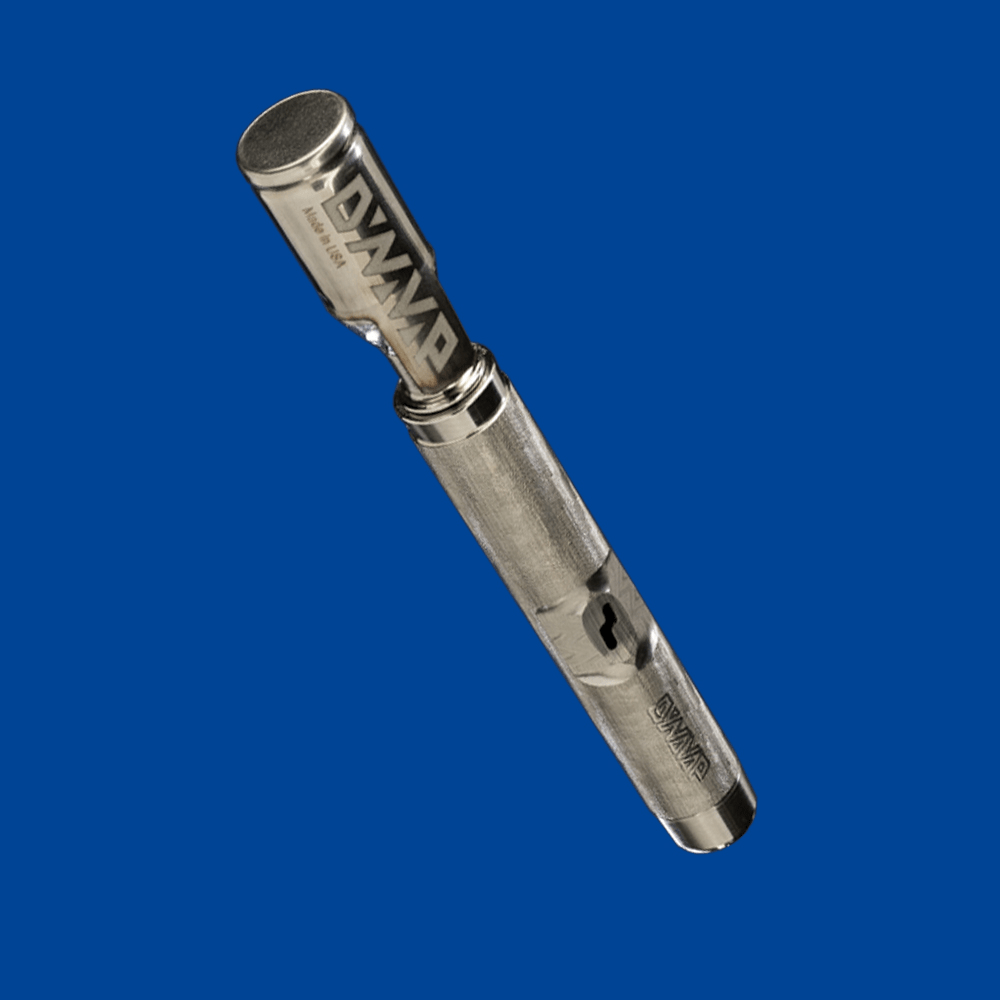
DynaVap's battery-free vaporizers use a single click on heat-up and a single click on cool-down. New to DynaVap? The B2, M 7, and M 7 XL are great starting points, all using a standard Tip in the regular 0.1g range. Coming back for another?
You can heat with a torch or an Induction Heater, though note that induction heaters do use a battery. Browse our Top 5 Dynavap Vaporizers to compare options. Then pick up Dynavap Accessories to round out your setup, including Dynavap Dosing Capsule Hyper 5 Pack or the Dynavap Dosing Capsule Standard 5 Pack for tidy, consistent loads, plus a Dynavap Tin Case to keep material fresh.
One care tip: never soak the Cap. A simple wipe down is all it needs.
Frequently Asked Questions
How do you read a cannabis COA?
Start at the top with the batch number, sample ID and testing date, then check the lab's name and accreditation. Move to the potency table to compare total THC and total CBD against what the label claims. Next, scan the contaminant panels for pesticides, heavy metals, microbials and residual solvents, looking for pass or fail results. Finally, confirm the report matches the exact batch you're holding. A cannabis certificate is only useful when every section ties back to that specific product.
How can you tell if a cannabis COA is legitimate?
Look for a batch number and sample ID that match the packaging, a testing date within the last few months, and the lab's ISO/IEC 17025 accreditation stated on the report. Check whether the lab publishes results on its own website so you can cross-reference. Generic COAs that list no batch details or show only a QR code with no readable data are a warning sign. If the potency looks unusually high and the contaminant panels are blank, treat it as unverified.
What do THC and CBD results mean on a cannabis COA?
The report usually shows THCA and CBDA (the raw acid forms) alongside total THC and total CBD after decarboxylation. Total THC reflects what you'd actually experience when the material is heated, while total CBD shows the non-intoxicating cannabinoid content. Results appear as a percentage by weight or in milligrams per gram, so you can compare products on a like-for-like basis. A cannabis COA potency result that doesn't match the label claim is worth questioning before you buy.
How recent should a cannabis certificate of analysis be?
Aim for a report dated within the last three to six months for the batch you're buying. Cannabis material changes over time as moisture content shifts and cannabinoids degrade, so an older COA may no longer reflect what's in the jar. Check that the batch number on the report matches the packaging exactly, and ask for a fresher report if the dates don't line up. Batch-specific COAs dated close to harvest are the most reliable guide to quality.
Reading a COA well takes a little practice, but it quickly becomes second nature. If you want a device that makes the most of quality-checked material, DynaVap has you covered with modular, durable, battery-free vaporizers built to last. Get started with DynaVap and enjoy a cleaner, more controlled session every time.