Last Updated: October 29, 2026
Quick Summary
To reduce nicotine intake with vaping, build a written step-down plan: record your current strength, millilitres used and sessions per day, then drop in modest increments and hold each new strength for two to four weeks. Track millilitres and sessions weekly so compensatory puffing does not cancel out your progress.
- Hold each new vape strength for two to four weeks before dropping again.
- Track millilitres used and sessions per day to measure your real exposure.
- If cravings stay daily and intense for over a week, hold your current strength.
- Ride out cravings with water, a short walk, gum or keeping your hands busy.
- If millilitres used stays flat or rises after a drop, compensatory vaping is likely.
Table of Contents
- Why a Slow Step-Down Beats Going Cold Turkey
- Building Your Nicotine Reduction Plan for Vaping
- How Long to Stay on Each Vape Strength
- Managing Nicotine Cravings When Reducing Vaping
- How to Reduce Vaping Frequency Without Over-Vaping
- Device and Nicotine-Form Choices That Make Stepping Down Easier
- What to Do After a Difficult Step-Down
- Choosing Your Next Device for a Lower-Nicotine Routine
- Frequently Asked Questions
Why a Slow Step-Down Beats Going Cold Turkey
Many people who try to reduce nicotine intake outright find it hard to keep going, because sudden withdrawal stacks every craving, trigger and habit change into a single difficult week. A gradual step-down spreads that load out.
The goal is not heroics; it is a plan you can still be following next month. Below, we'll show you exactly how to build a taper, how long to hold at each strength, and what to do when a step feels too hard. The approach is deliberately unglamorous, and that is why it works.
Building Your Nicotine Reduction Plan for Vaping
A plan to reduce nicotine intake for vaping is a written schedule that sets your starting strength, your target strength, the length of each step, and the date you review progress. It turns a vague intention into something you can measure. Without one, most people drift, cut too fast, and quietly return to their old bottle.
Pick a Start Point and a Finish Line
Start by writing down what you actually vape now: the strength in mg/ml, roughly how many millilitres you get through in a week, and how often you reach for the device. That is your baseline.
Then choose a step size. Many vapers find that dropping in modest increments every few weeks is more sustainable than halving their strength overnight. If you are coming from a high-strength e-liquid, expect more steps; if you are already low, two or three steps may be enough.
How to Measure Your Actual Nicotine Exposure
Strength on the bottle is only half the story. Your real nicotine intake is strength multiplied by how much liquid you actually consume. Someone on a low strength who vapes constantly can take in more than someone on a higher strength who takes a few puffs an hour.
Track two numbers each week: millilitres used and number of sessions. Multiply them out roughly and you get a working picture of your exposure. This is the step most guides skip, and it is the one that stops you fooling yourself when a strength drop is quietly cancelled out by heavier puffing.
How Long to Stay on Each Vape Strength
There is no universal timetable, but a practical rule is to hold each new strength for two to four weeks before dropping again. That gives withdrawal symptoms time to settle and lets you judge whether the step was too big. If you are still fighting cravings daily after a fortnight, stay put for another week rather than pushing on.
A larger-capacity device helps here, because consistent sessions make each step easier to judge. If you are planning a longer stay at each strength, a device with a larger chamber can give you more room per session while you settle in.
Example Taper Timelines and Decision Points
To make this concrete, here are two example schedules. They are illustrations, not prescriptions, your pace should follow how you actually feel.
Example A: coming from a higher strength
- Weeks 1-3: hold at your starting strength, track millilitres used and sessions per day.
- Weeks 4-6: drop one modest step. If cravings are manageable after week 5, continue; if not, hold another week.
- Weeks 7-9: drop again. Watch for compensatory puffing (more sessions than your baseline).
- Weeks 10-12: drop again or hold, depending on how the previous step felt.
- Weeks 13-16: final step toward zero or your target strength, with a support plan in place.
Example B: already on a lower strength
- Weeks 1-2: hold and baseline.
- Weeks 3-5: one step down.
- Weeks 6-8: second step down.
- Weeks 9-11: final step to zero or target.
Decision points to check each week:
- Are cravings daily and intense, or occasional and passing?
- Are you vaping more sessions than your baseline?
- Is sleep or mood noticeably worse?
If you answer yes to the first or second point for more than a week, hold at the current strength rather than dropping. A short pause costs you a fortnight; pushing through a step that is not working often ends in returning to your original strength entirely.
| Step | Typical Hold Time | What to Watch |
|---|---|---|
| First drop | 2-3 weeks | Irritability, sleep changes |
| Middle steps | 2-4 weeks | Compensatory puffing |
| Final step to zero | 3-4 weeks | Strongest cravings, plan support |
Managing Nicotine Cravings When Reducing Vaping
Cravings are the part people underestimate. Managing nicotine cravings when reducing vaping comes down to three moves: ride out the short ones, replace the ritual, and remove the trigger before it fires.
Practical swaps that work for many vapers:
- Drink a glass of water slowly instead of reaching for the device
- Take a short walk, especially when a craving hits at your usual session time
- Chew sugar-free gum to keep your mouth busy
- Keep your hands occupied for the first five minutes of a craving
If you want more from each session while you cut back, a fuller flavour experience helps. Our step-by-step guide to getting a full terpene profile shows how to get more from each session.
Spotting Triggers Before They Hit
Triggers are the situations that make you reach for the device without deciding to. Common ones include finishing a meal, stepping outside, driving, and the first ten minutes after work. Write yours down for a week. Once you can name them, you can plan around them: change the routine slightly, delay by five minutes, or pair the moment with one of the swaps above.
How to Reduce Vaping Frequency Without Over-Vaping
Cutting strength without watching frequency is how compensatory vaping sneaks in. You drop the nicotine, then unconsciously puff more often to make up the difference. The fix is to reduce vaping frequency deliberately rather than letting it drift upward.
Measure Before You Manage
Strength on the bottle is only half the story. Your real nicotine exposure is strength multiplied by how much you actually consume. Someone on a low strength who vapes constantly can take in more than someone on a higher strength who takes a few puffs an hour.
Track two numbers each week: millilitres used and number of sessions. Multiply them out roughly and you get a working picture of your exposure. This is the step most guides skip, and it is the one that stops you fooling yourself when a strength drop is quietly cancelled out by heavier puffing.
A simple weekly log works:
- Millilitres used (check your bottle or pod)
- Sessions per day (a rough count is fine)
- Any days where cravings felt unmanageable
If millilitres used stays flat or rises after a strength drop, compensatory vaping is likely happening. That is your signal to hold the current strength rather than drop again.
Set a Session Budget and Adjust
Try spacing sessions with a simple timer, or set a fixed number of sessions per day and stick to it for a week before adjusting. Keep your device out of easy reach between sessions.
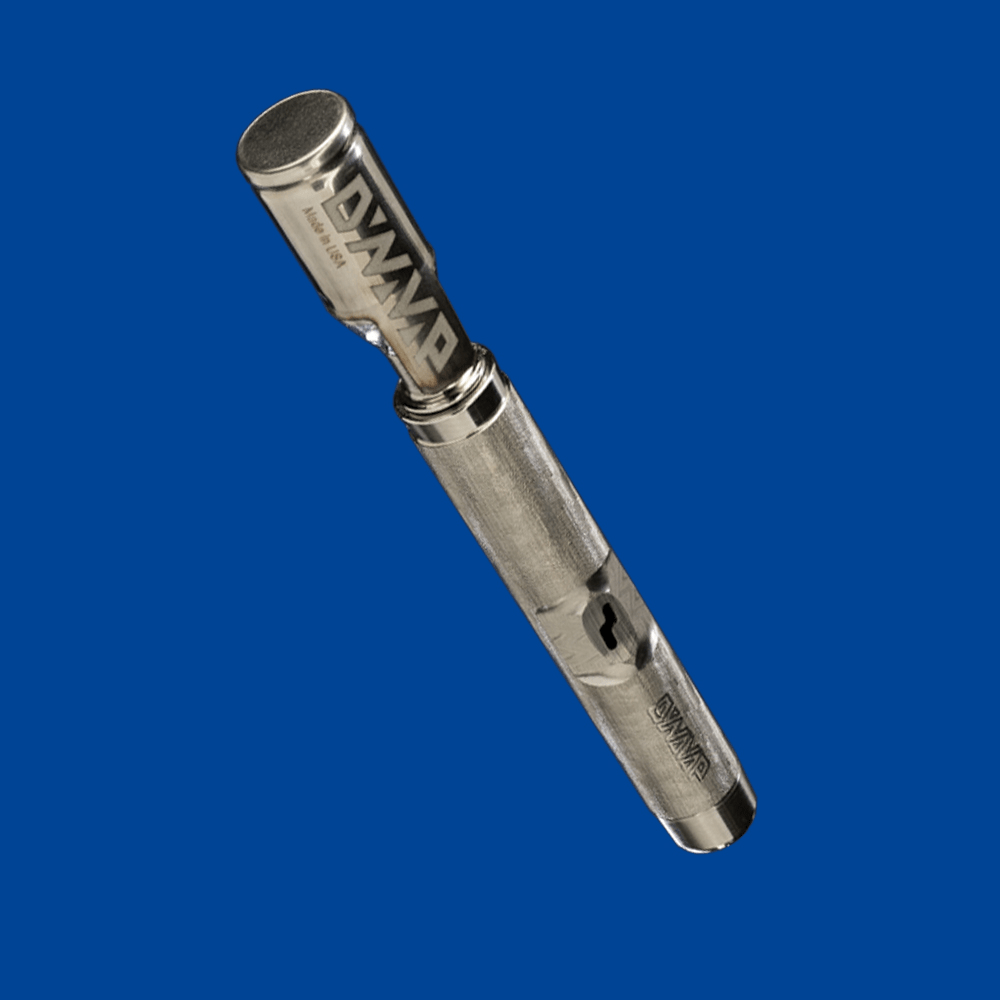
A device that makes each session deliberate helps here. DynaVap devices are battery-free and use a torch or an induction heater for heating (an induction heater does use a battery of its own). The click tells you when you are ready, with one click on heat-up and one on cool-down, so there is no temperature guessing.
Device and Nicotine-Form Choices That Make Stepping Down Easier
Your device shapes how easy the taper feels. Pod systems are simple and discreet, sub-ohm devices deliver more vapour per puff, and nicotine salts give a smoother hit at higher strengths while freebase suits lower ones. If you are stepping down, a device that lets you control each session makes the process far more predictable.
This is where a battery-free option earns its place. A starter kit that supports a lower-nicotine routine is the practical choice here, and the B2 Starter Pack fits that brief well.
What to Do After a Difficult Step-Down
A hard step is information, not failure. If a drop leaves you irritable, sleepless or constantly craving, go back up one level for a week or two, then try a smaller step. Relapse prevention starts with treating a tough week as a signal to slow down rather than a reason to abandon the plan.
Watch out: pushing through a step that clearly is not working often ends in returning to your original strength entirely. A short, deliberate pause costs you a fortnight; a full relapse can cost you months.
Choosing Your Next Device for a Lower-Nicotine Routine
When you are ready to settle into a lower-nicotine routine, pick a device that suits how you actually vape rather than the one with the most features. New customers often do well with the B2 or the M 7 and M 7 XL.
For a closer look at how the range compares, our team is happy to help you match a device to your plan.
Frequently Asked Questions
How do you gradually reduce nicotine strength when vaping?
Drop your e-liquid strength in small steps rather than jumping straight to zero. Most people do well moving down one level at a time, staying on each for a few weeks before the next drop. Keep your device and routine the same at first so the only change is the strength. Track how you feel for the first week after each step, and hold at that level longer if cravings spike. The aim is steady progress, not speed.
How long should you stay at each nicotine strength before reducing it?
Two to four weeks per step suits most people, but there is no fixed rule. Stay on a strength until your cravings feel manageable and your vaping frequency has settled. If you are still reaching for your device more often than usual after a week or two, give it more time. Rushing the steps tends to trigger compensatory vaping, where you puff harder to make up for the lower strength.
What should you do if nicotine cravings increase after stepping down?
First, check whether you have actually increased how often you vape. If you have, hold at the current strength for another week or two before trying the next drop. Use behavioural alternatives for sudden cravings: a glass of water, a short walk, or sugar-free gum. If cravings stay intense for more than a fortnight, go back one step, stabilise, and plan a slower taper. A small retreat is not a failure.
Is it better to reduce nicotine strength or vape less frequently?
Doing both at once is hard to manage. Start with strength, because it is easier to measure and adjust, then work on frequency once you are comfortable at a lower level. Reducing frequency first can work if your habit is more about the ritual than the nicotine. Whichever you pick, change one variable at a time so you can tell what is actually causing any cravings.
Cutting nicotine gradually is a challenge worth taking on, and having the right device makes it far easier to stay consistent. At DynaVap, our battery-free vaporizers give you a cleaner, combustion-free session with a click-based indicator, modular design and durable construction, backed by a 90-day money-back guarantee. Get started with DynaVap and build a step-down routine you can actually stick to.